Celebrating a Milestone for Maternal Nutrition: Training 20,500+ Healthcare Practitioners to Deliver MMS at Scale in Indonesia

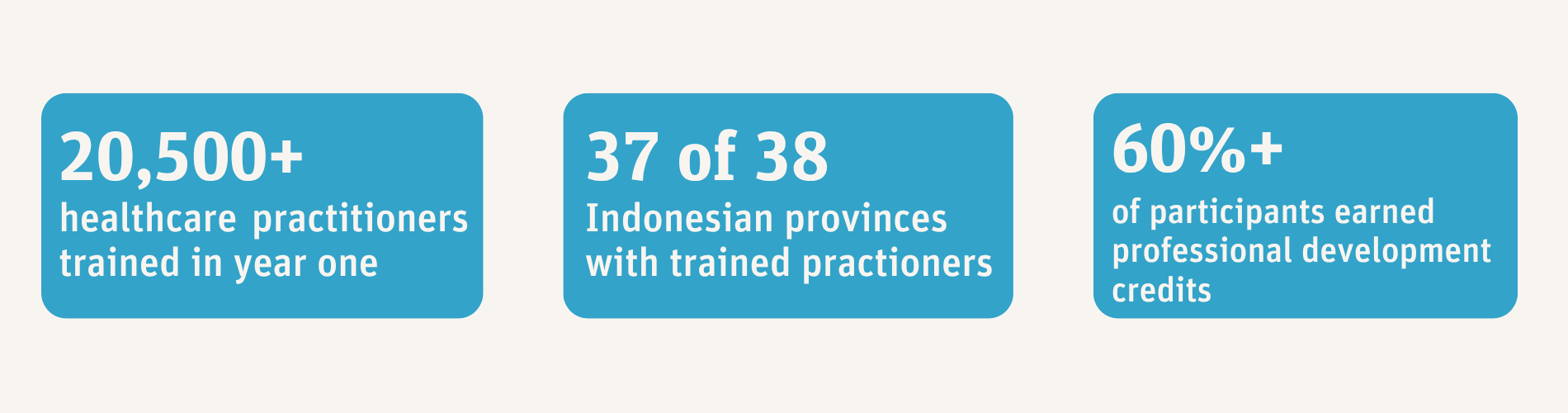
In its first year, Sight and Life's coordination with the Ministry of Health in Indonesia and partnership with Alomedika has trained over 20,500 healthcare practitioners to deliver multiple micronutrient supplementation (MMS), reaching doctors, midwives, and nurses across 37 of Indonesia's 38 provinces
One year into Indonesia’s transition from iron and folic acid (IFA) to MMS, strong progress is being made in advancing maternal nutrition nationwide. This shift, led by the Government of Indonesia, marks an important step forward in strengthening antenatal care by expanding from two nutrients to a formulation of 15 essential vitamins and minerals for prenatal care. MMS has the potential to significantly improve maternal health and birth outcomes, including helping to prevent an estimated 8,600 child deaths annually in Indonesia alone.
Central to the success of this transition are healthcare practitioners. Doctors, midwives, and nurses are the most trusted sources of information for pregnant women, and their guidance plays a critical role in shaping health behaviours. As the primary point of contact during antenatal care, they are key to raising awareness, building confidence, and driving adoption of MMS.
Recognizing this, Sight and Life, working in coordination with the Ministry of Health in Indonesia and with support from the Children’s Investment Fund Foundation (CIFF), has partnered with Alomedika — one of Indonesia's leading digital health platforms, with a community of over 150,000 doctors — to strengthen the capacity of healthcare providers through accredited, accessible digital training. This builds on similar efforts in countries such as Nigeria, where frontline health workers are also being trained to deliver improved antenatal nutrition services. In its first year, this initiative has already reached over 20,500 healthcare practitioners, equipping them with the knowledge and confidence to support the delivery, adoption and scale-up of MMS in Indonesia.
Building a Strong Foundation in Year One
The programme has made strong progress in expanding access to MMS knowledge and strengthening healthcare providers’ capacity at scale. Participation has been strong across the private sector, where many women access antenatal care, and physician engagement has grown steadily, complementing the central role midwives play in maternal health. More than 60% of participants earned credits through the Ministry of Health's Continuing Professional Development system, a signal that this training has been formally integrated into professional practice rather than treated as a one-off exercise. Additionally, all course content remains hosted on the Alomedika platform, ensuring practitioners retain access to learning materials beyond the training itself.
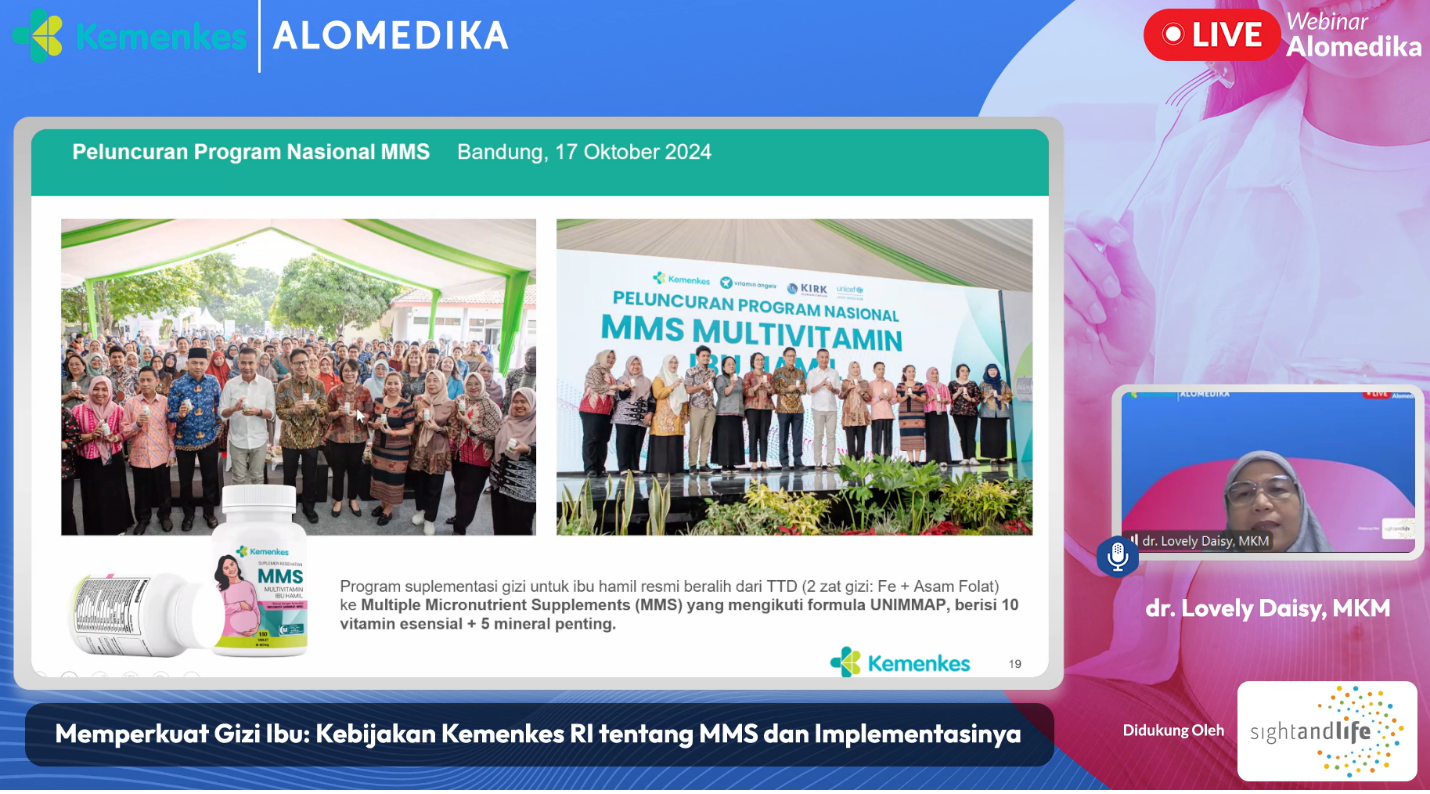
Dr. Lovely Daisy, MKM, Director of Family Health at the Ministry of Health, joined one of the webinar series and shared valuable insights on “Strengthening Maternal Nutrition: Indonesia Ministry of Health Policy on MMS and Its Implementation.
Driving MMS Adoption Through Partnership and Scale
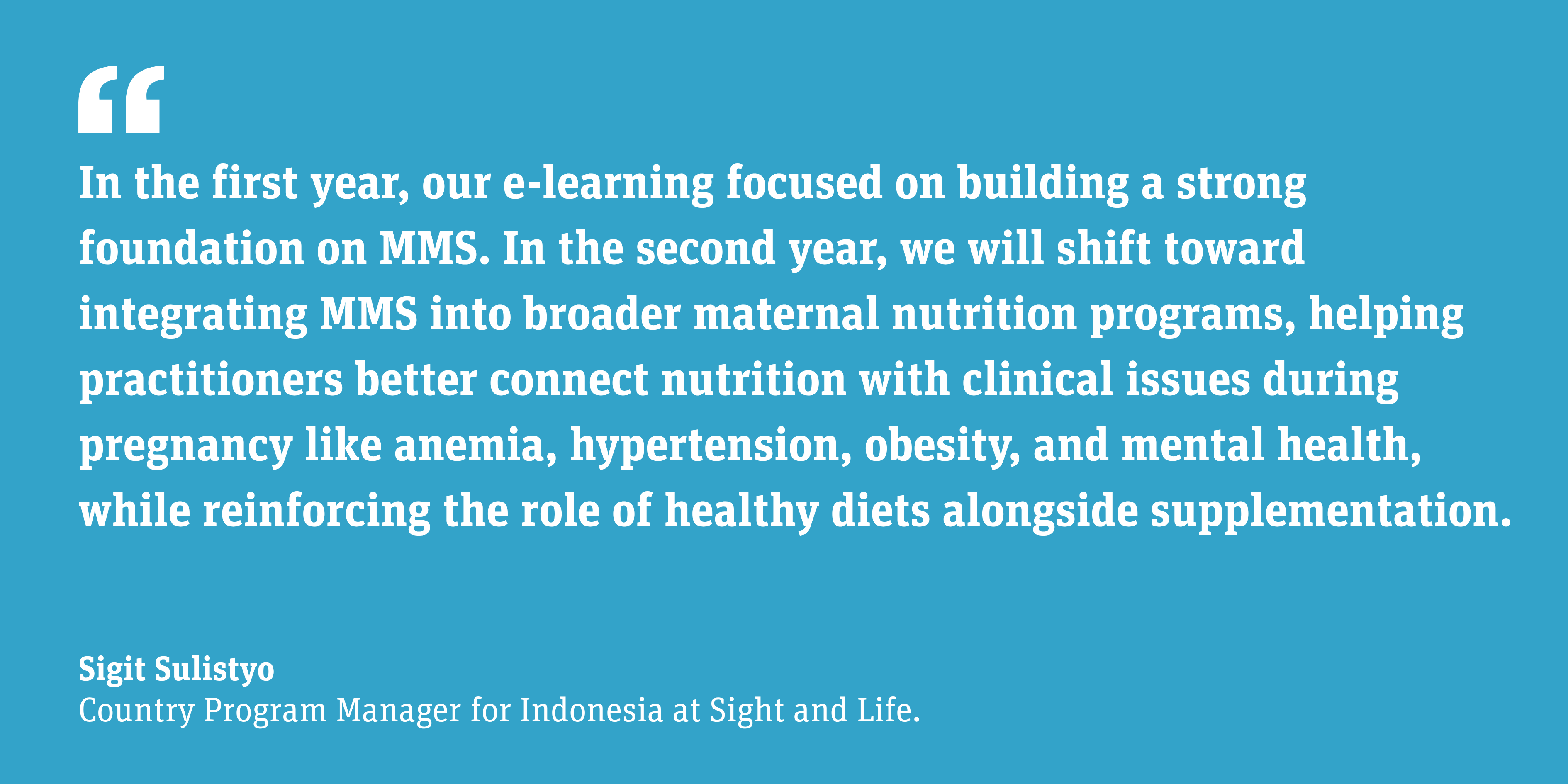
As the program enters its second year, the focus is evolving from building foundational knowledge to supporting more integrated approaches to maternal nutrition.
The collaboration with Alomedika has been central to achieving rapid scale. As one of Indonesia’s leading digital health platforms, it provides access to a large and engaged network of healthcare professionals.
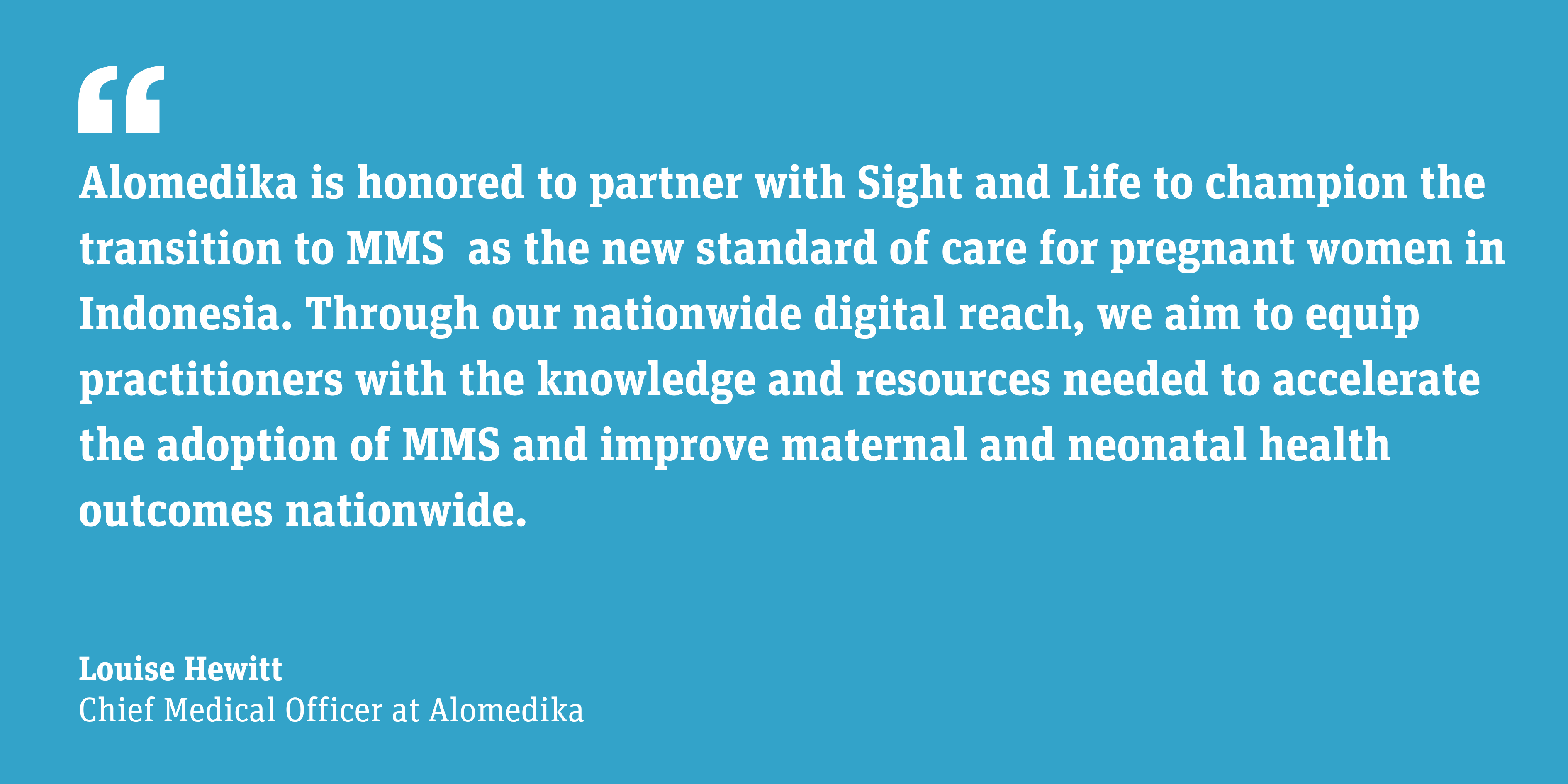
By combining digital reach with accredited learning, the partnership helps ensure that healthcare providers have both the knowledge and the professional incentives to engage with MMS.
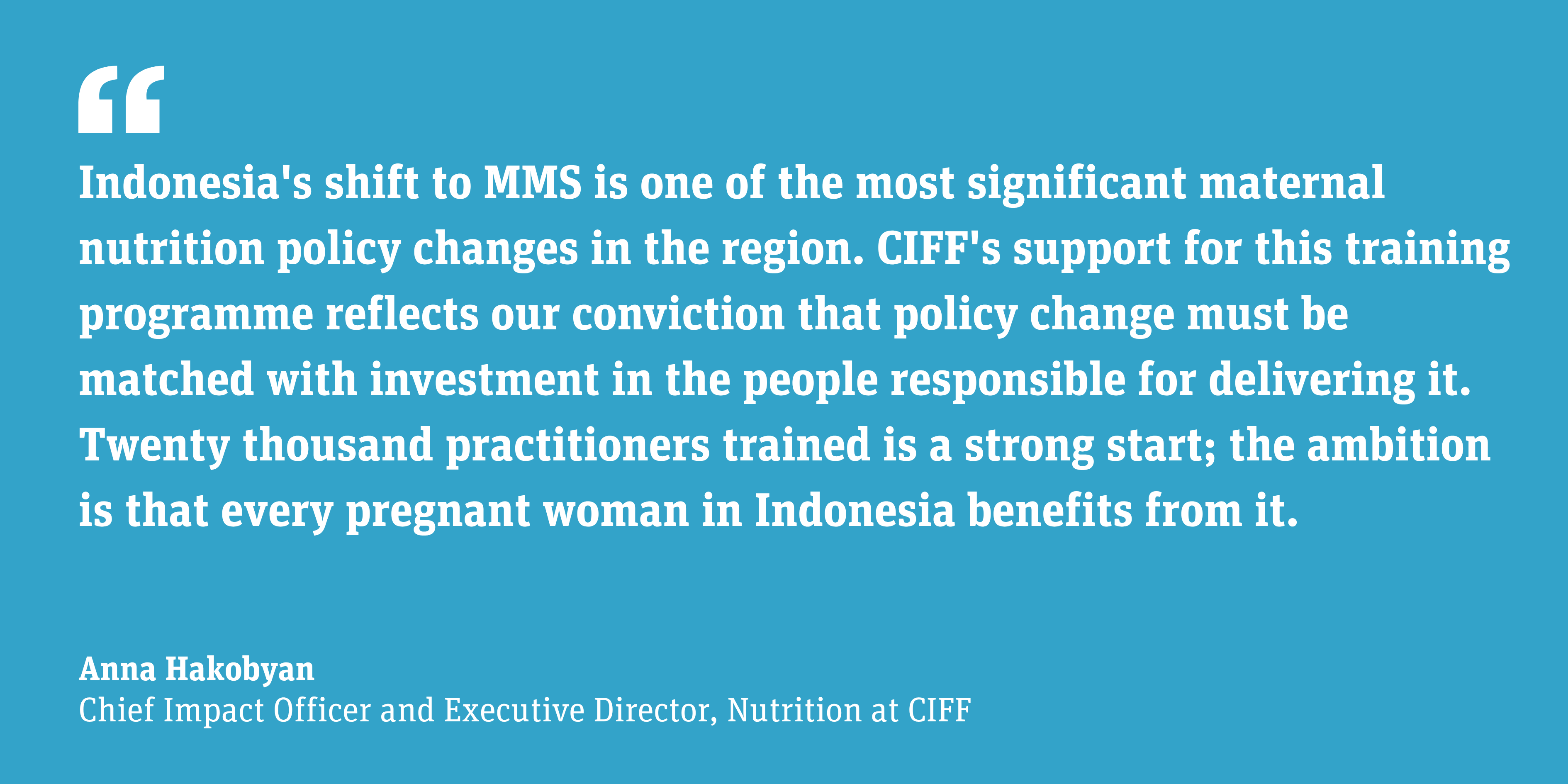
For CIFF, whose commitment to evidence-based nutrition solutions has driven the initiative from the outset, the progress of year one is proof that the conditions for lasting change are in place.
What We’re Learning from the Frontline
As MMS is introduced into routine care, practitioners are engaging seriously with what it means to apply new guidance in real clinical settings. Questions around how MMS replaces IFA, appropriate duration of use, and how it sits alongside other supplements reflect a workforce actively working through the practical implications, not just absorbing information. Healthcare practitioners are also raising questions about MMS use in the context of specific conditions such as thalassemia and tuberculosis, which points to a level of clinical engagement that goes well beyond the basics.
The Work Ahead
With approximately five million pregnancies each year, Indonesia has a significant opportunity to improve maternal and child health through MMS, and so does the responsibility to get implementation right.
The first year has shown what is possible when government leadership, digital infrastructure, and on-the-ground training move together. The second year will continue focusing on closing gaps in the MMS uptake to translate into better and more effective care for pregnant women across the country.
Authors


Samuel Ayooluwa Okunjolu
Manager – Communications
Connect


Discover more
News & announcements
Find out what is new at Sight and Life

Multimedia
Explore our videos, podcasts, and infographics